Heavenly Hellebores

When much of the garden lies dormant, these flowers become the star of the show.
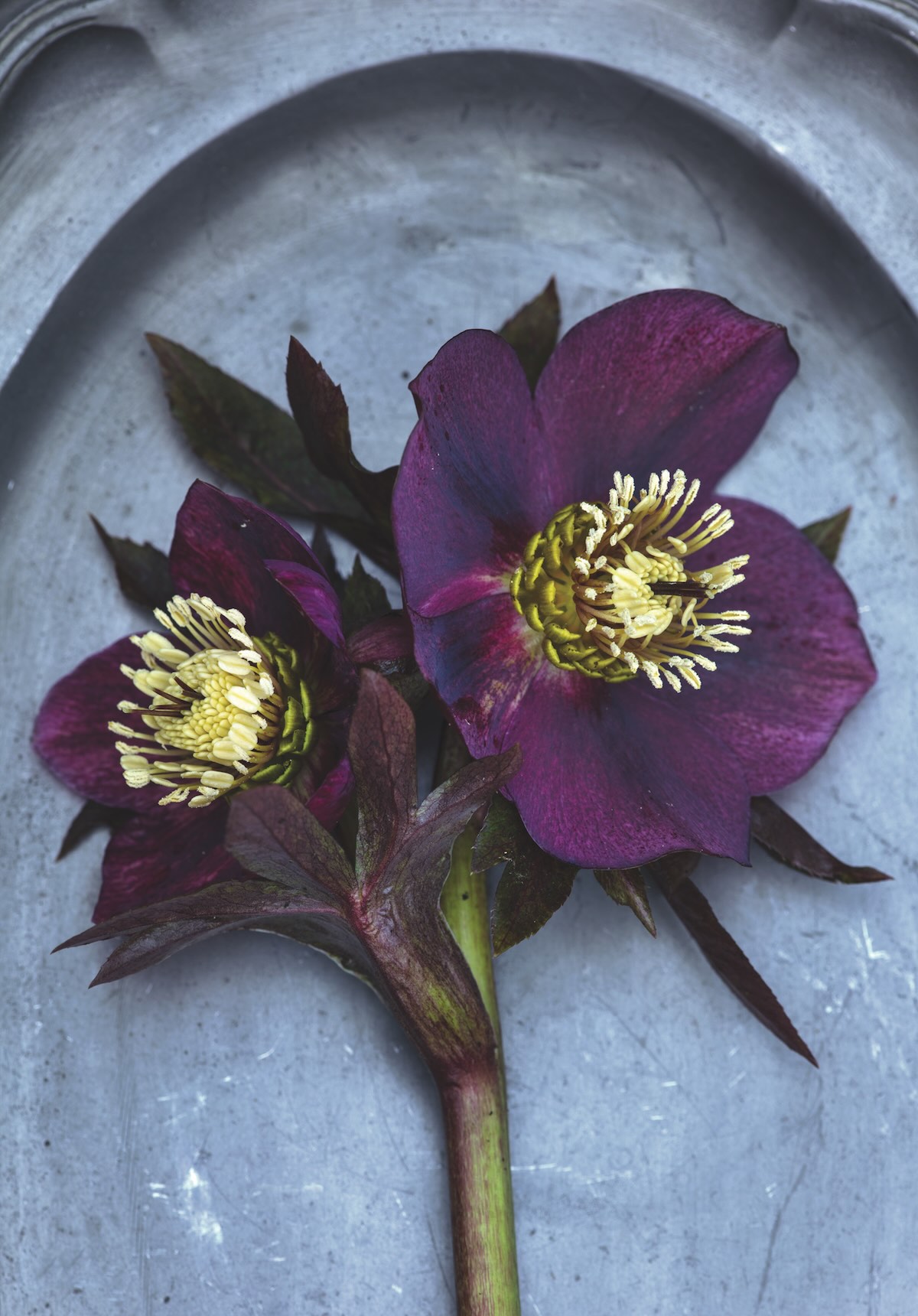
Two dark purple hellebores lay flat on a stone dish

Photo by Clive Nichols/Jacky Hobbs

Whether in the garden, an arrangement, or a still life (such as this one pictured by Clive Nichols), hellebores bring botanical drama when little else is in bloom.
Just when everything is on pause outside, that’s when hellebores unfold, mastering the art of the unexpected. Given the timing of their floral performance, you’d expect something small and timid. Instead, hellebores are the floral equivalent of Haydn’s “Surprise Symphony.” While some begin flowering in November, the hardiest hellebores bloom in late winter. These immense blossoms happen at ground level when patchy snow is still visible, the grass has yet to green up, and maples are just a hopeful haze of color overhead. Part of a hellebore’s magic is the element of disbelief. How could this flower be possible?
An arrangement of purple and white hellebores stand up on a stone table

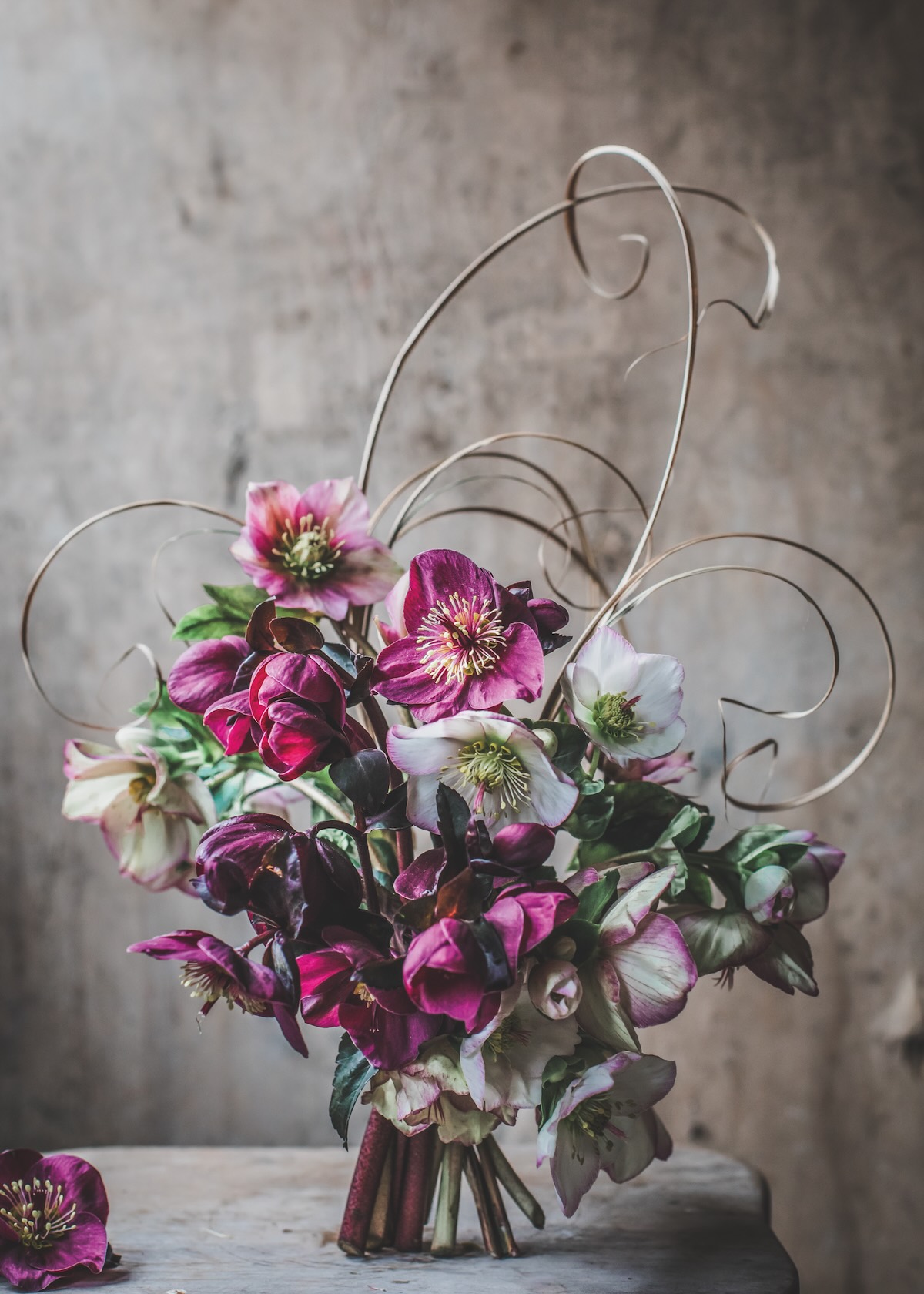
Photo by Jannel Ford

"My arrangements are garden-inspired," says floral designer and photographer Janne Ford. "Cutting a small bunch of hellebores on a cold day to team with dried ornamental grasses from the studio seems completely natural, but the contrast in line and form makes it feel contemporary too." She approaches photographing flowers as portraits, adding, "I always look for their best side."
Early winter blooming hellebores (Helleborus niger; native to the Alps; Hardiness Zones 3-8) are known as the Christmas rose, while the late winter/early spring blooms (Helleborus orientalis; native to Greece, Turkey, and Russia; Hardiness Zones 4-9) are the Lenten rose. But these are only the tip of the iceberg. What we have available now is a complex fusion of many species composing the Helleborus x hybridus brews that are the newest darlings of garden centers throughout the land. Not only do these flowering plants cover a broad swath of time from November through May, they also are believed by many to have their namesake roses beat by a mile. Poetic and complex, the blossoms are massive and swoon-worthy just when you least expect a performance—no thorns involved. David L. Culp, creator of the gardens at Brandywine Cottage in Downingtown, Pennsylvania, helped bring hellebores into the limelight in this country. On a trip to Britain decades ago, he visited Ashwood Nurseries during their revolutionary hellebore hybridization. Impressed and enlisted, David began a cross-Atlantic dialogue, followed by 15 years of intensive breeding that involved venturing outdoors in winter to hand-pollinate the flowers. In 2015, he introduced the ‘Brandywine Hybrid’ hellebores, but that was just the beginning.
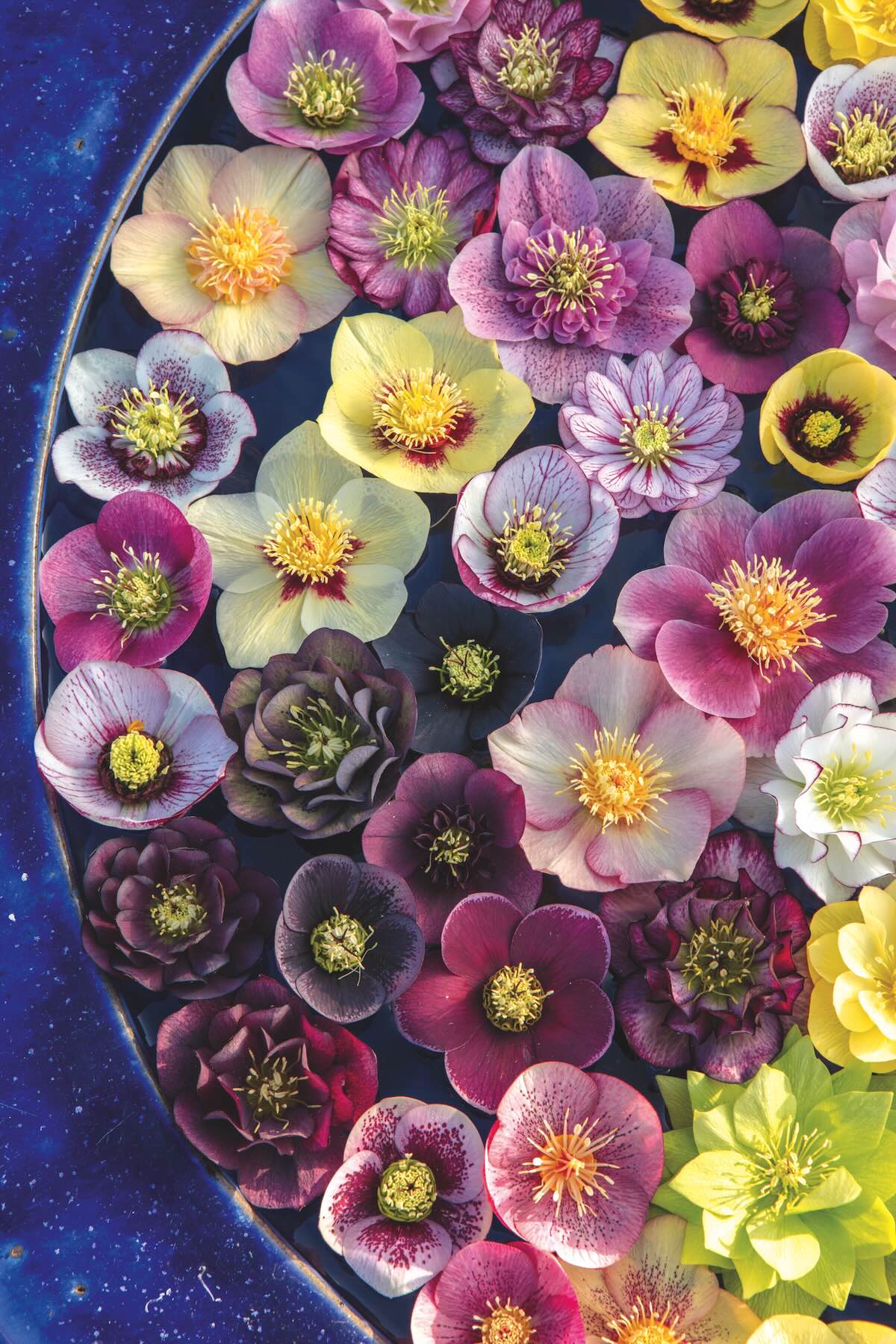
Heads of Hellebores float in water.

Photo by Clive Nichols

Clipping hellebores just beneath their blossoms to float in water ensures their full faces can be appreciated, as seen at Ashwood Nurseries, a pioneering breeder of hybrids in England.
A grab bag of singles and doubles, the Brandywine hellebores offer an array of colors spanning the gamut from butter yellow to nearly black. On purpose, the Brandywine hellebore blossoms are not upward facing. “That would be like someone telling you all about themselves in one moment,” says David. “I like subtlety.” But a very practical reason also steers his preference. “Upward hellebore flowers are ruined in sleet,” he says. Gaping wide open in the sun and partially closed when cloudy, hellebores have weather variables covered. Their showy, colorful sepals (often called tepals) swell and fold, and the petals have evolved into tubular nectaries ringing the stamens. Those nectaries are a boon for spring’s earliest flying insects. Another hellebore trait that has won gardener’s hearts is its ability to grow beautifully in dappled shade. While deep shade might dissuade the flowers, full sun is not needed. Constantly soggy roots are a killer, but besides that demand, hellebores tolerate a variety of soils. However, they don’t perform well outdoors in hot regions of the country. Sometimes the weather is more than a little forbidding when hellebores pop into flower, so you couldn’t be blamed for wanting to snip a few blooms to bring inside. Most hellebores are perfect candidates for cutting. Long, strong stems make your work easier, and breeders are striving to enhance that attribute.
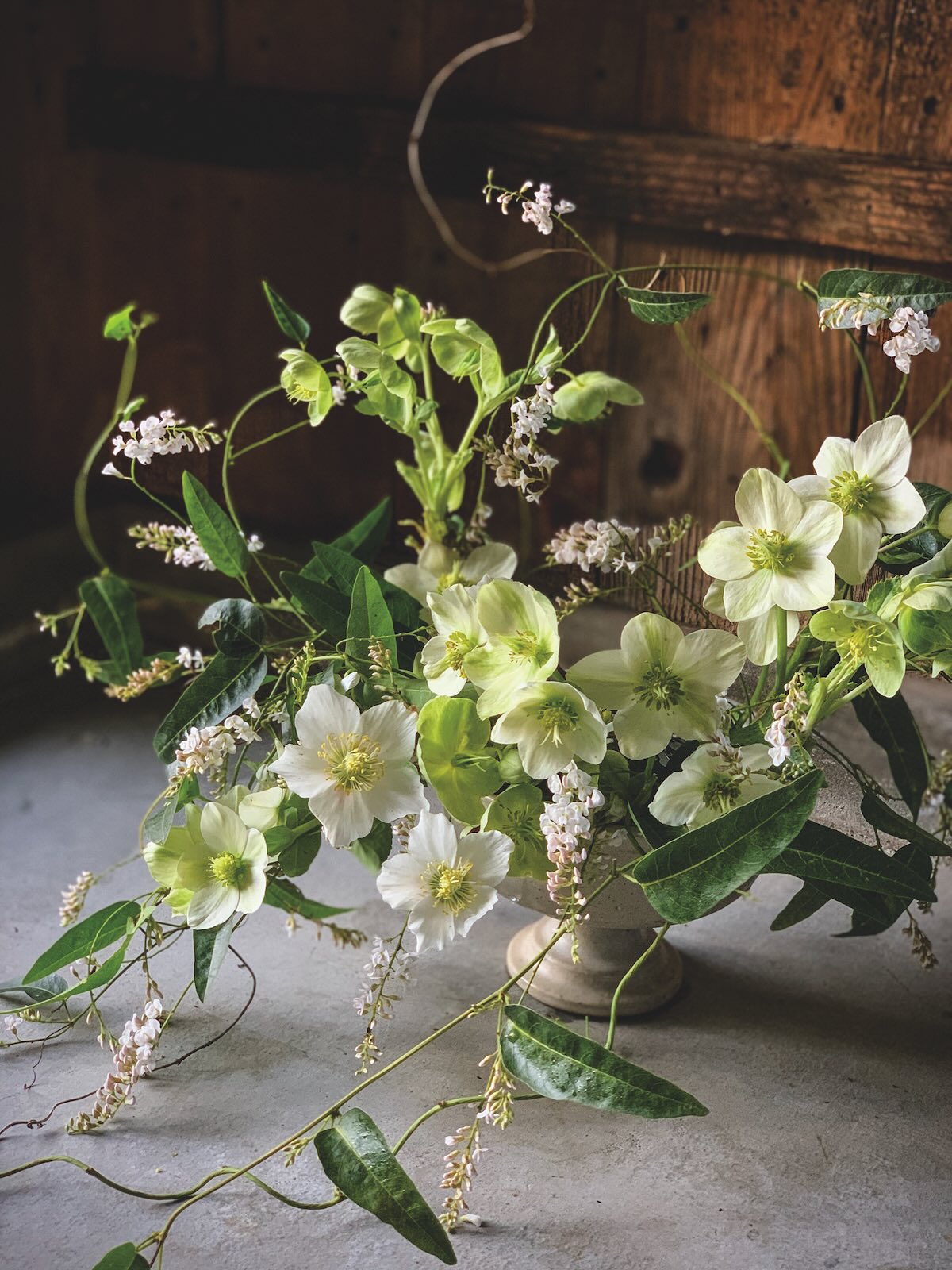
Green and white hellebores are arranged in a stone urn

Photo courtesy of Max Gill

"Hellebores are nodding flowers. There is something so appealing about that modesty,” says floral designer Max Gill. “They are lovely when you see their face, but they also provide a beautiful profile when they bow. I pair them with anything woodsy or textural, which I’ll often use to help prop their heads up. I do a lot of fiddling with hellebores when I need them to bend to my will.”

According to Floret Farm in Washington’s Skagit Valley, the trick to a long-lasting hellebore bouquet is not to cut when the flowers first burst open; instead, wait until the flower stamens have dropped and the seed pods are just beginning to form. Then sink the stems into cold water and enjoy a unique performance that evolves as the tepals gradually age to varied shades of green. Or try floating hellebores in a shallow dish to display their glory. The good news is that breeders are increasing the bud count, offering plenty of opportunities to cut while also leaving buds on the plants. To snip or not snip hellebore foliage is a heated topic. Some gardeners wait until the leaves detract from the floral glory. David clips off leaves around Christmas to allow flowers to emerge without risking snipping off buds as they pop from the base. The goal is not to jeopardize those flowers. Barbara Pierson, nursery manager at White Flower Farm, agrees as she references her favorite hellebore—‘Snow Love,’ a chartreuse charmer in the Winter Magic series. It opens creamy white and then slowly (hellebore flowers linger for weeks) fades to chartreuse. “It’s everything you could hope for,” she says. If hellebores have their way, gardeners will never have a down time again.

Hellebore Varieties

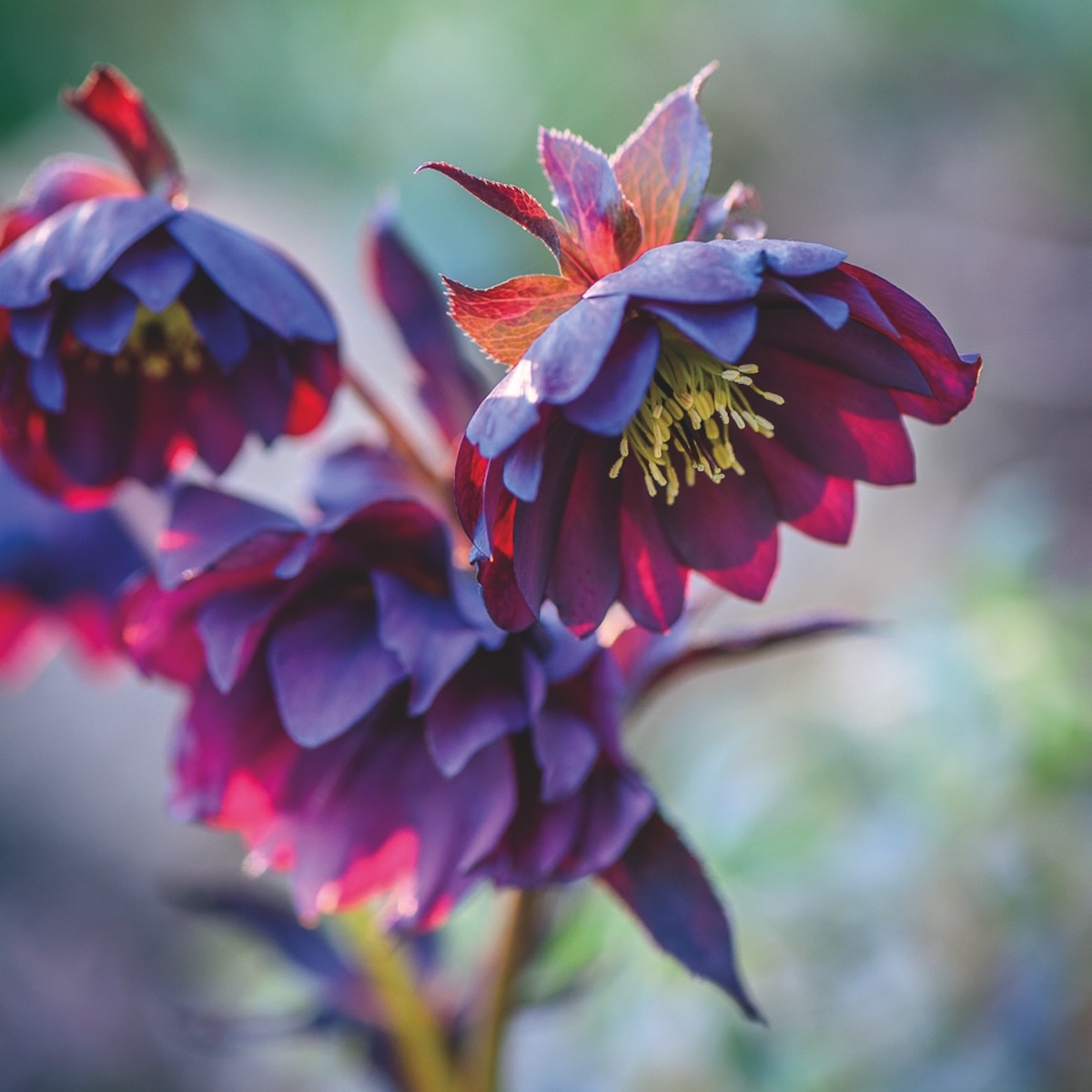
Three deep wine colored double hellebore flowers in garden

'Brandywine Hybrid'

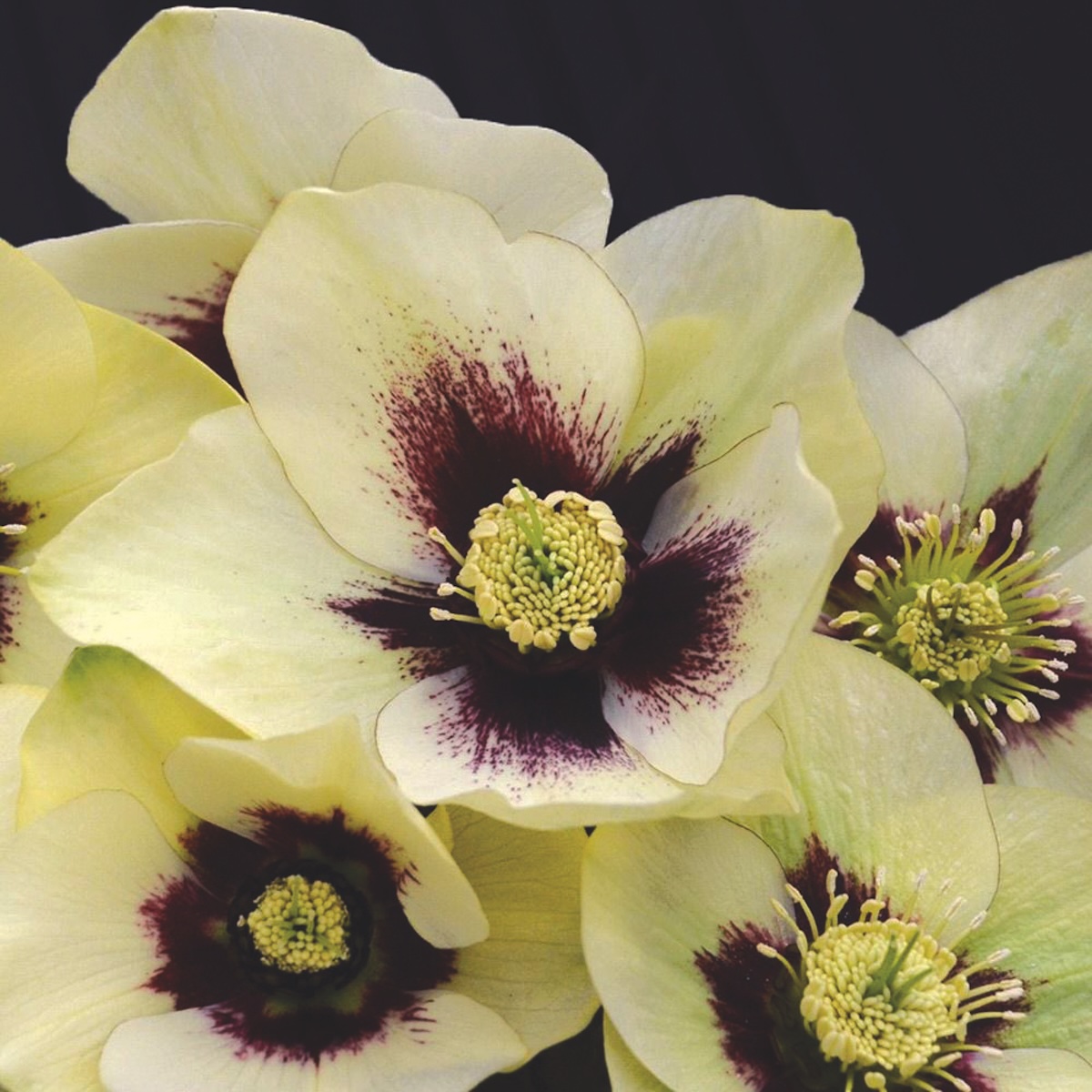
A group of off-white hellebores with purple centers

'Honeymoon, Spanish Flare'

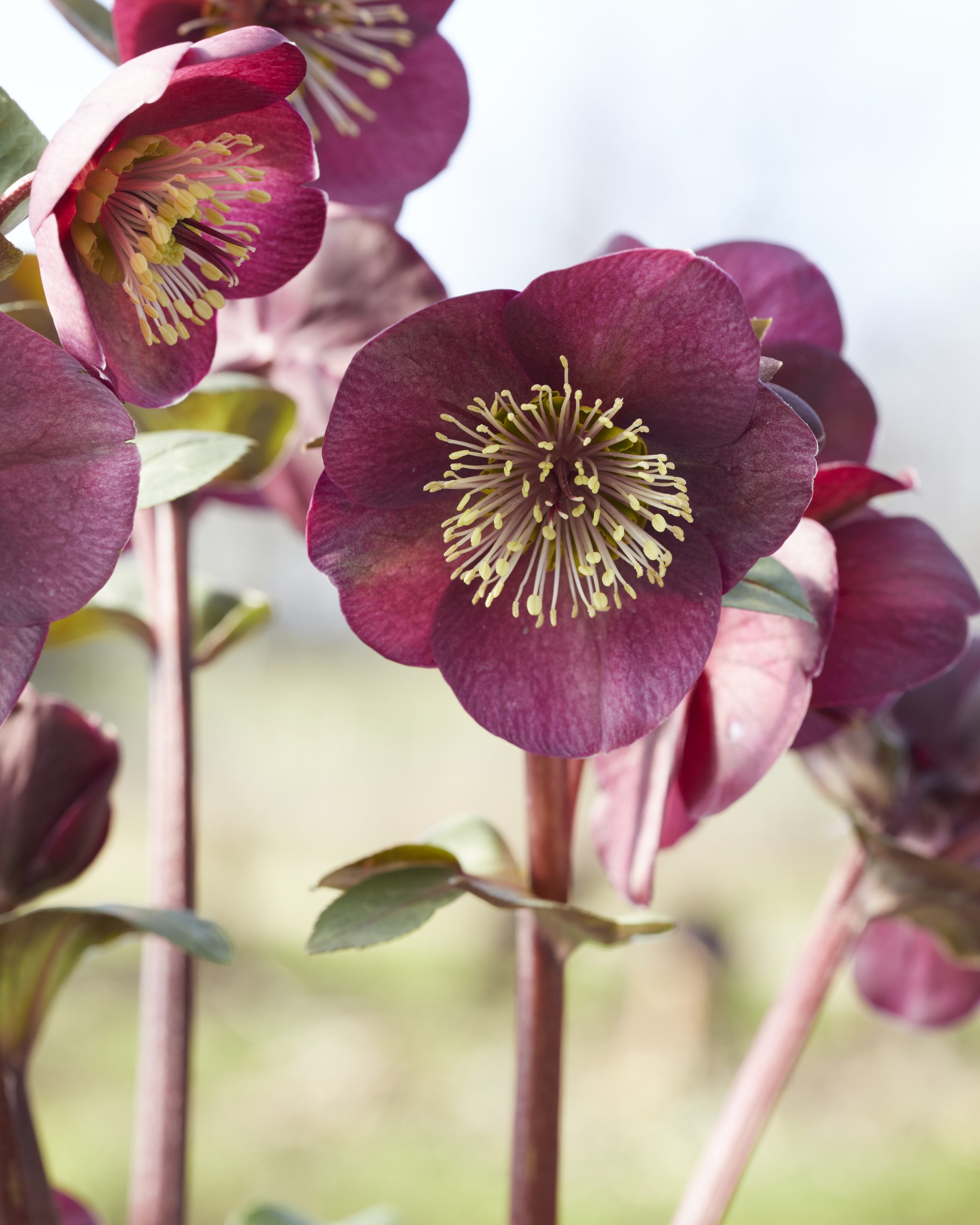
Two light purple hellebores stand in a field among other hellebores

'Vibey Velvet'

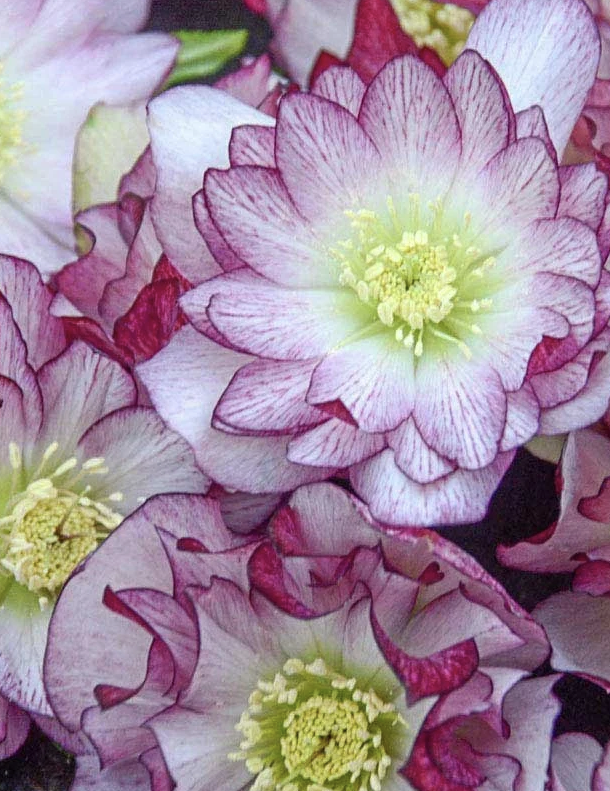
Three hellebores grouped together with purple edges and white interior petals

'Wedding Party/Blushing Bridesmaid'

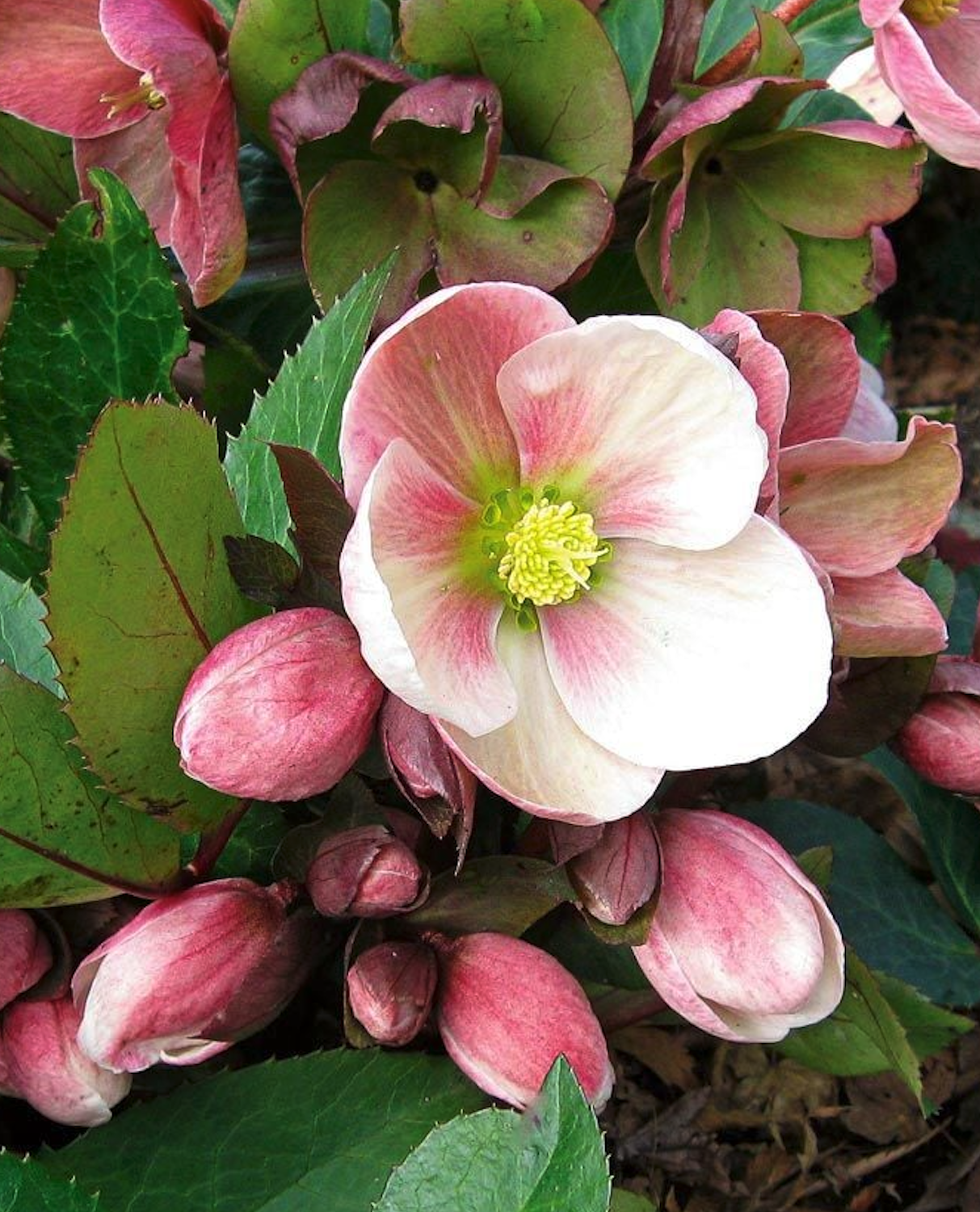
A large light pink hellebore blooms among a few hellebore bulbs

'Pink Frost'

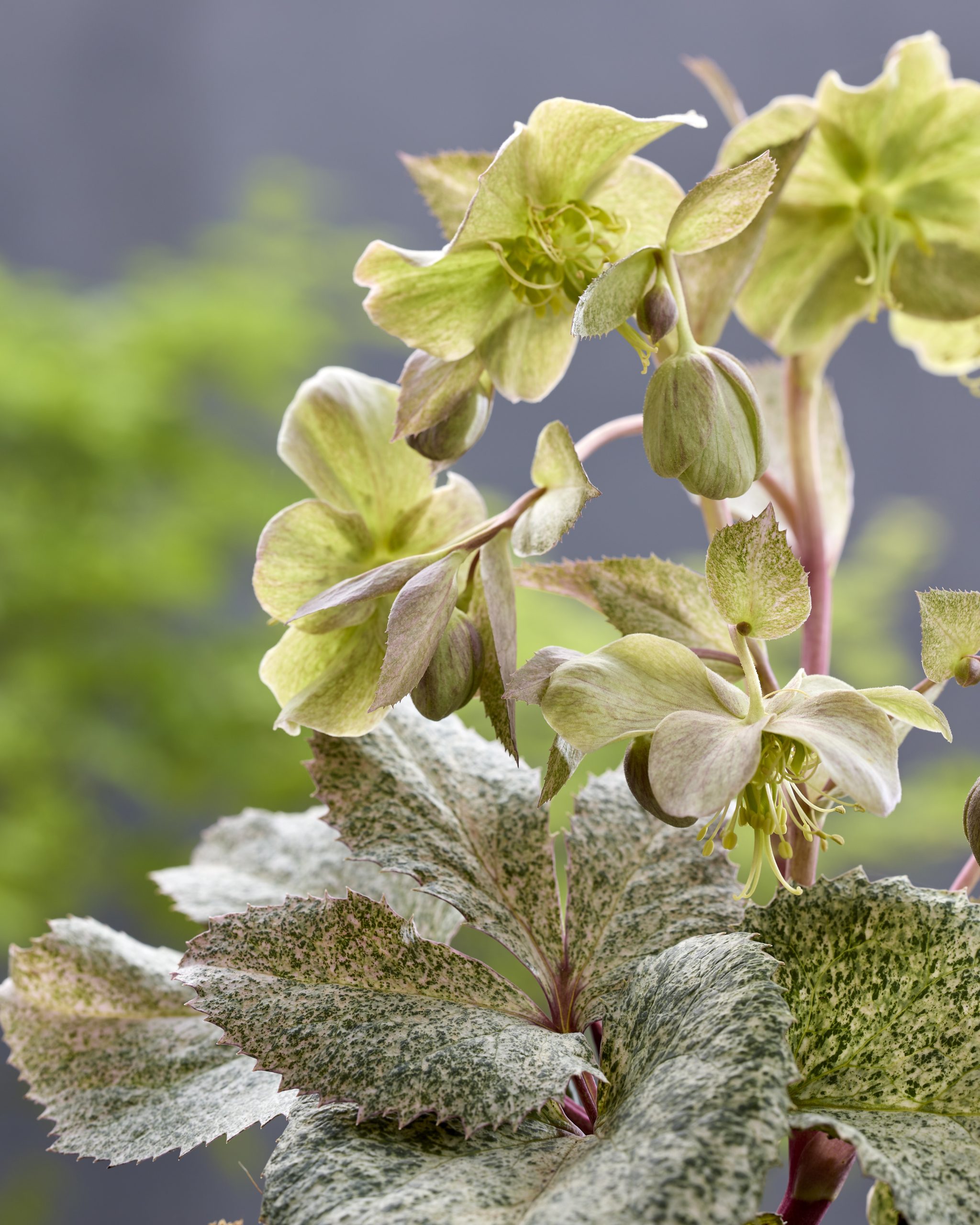
light green foliage stands up from dark green leaves

'Snowshoe Mountain'

The Newbies Barbara Pierson, nursery manager at White Flower Farm, has her finger on the pulse of hellebore introductions. Among her favorites is the FrostKiss series (Zones 5-9) due to its adaptability. She can recite a list of loves such as ‘Anna’s Red’ and the newest novelty (2023) ‘Vibey Velvet,’ featuring flowers held on elongated stems above the leaves. (Heads up, flower arrangers!)

The Versatile Hellebores have also added another application to their job suite—they make incredible potted houseplants in an east-, west-, or south-facing window, blossoming in late winter on your sill when you desperately need a thrill. The HGC (Helleborus Gold Collection) ‘Pink Frost’ was bred with containers in mind. However, all parts of a hellebore are toxic, so avoid growing where children or pets may grab hold. Outdoors, this trait protects the plants from deer.

The Showstoppers The Honeymoon (single flowering) and Wedding Party (double flowering) series, developed by Hans Hansen of Walters Gardens, have expanded their color range while also enhancing their floral markings to include striping, speckling, and cranberry markings. The ‘Brandywine Hybrid’ from David L. Culp also turns heads with its wide range of hues.

The Unexpected Another trend in hellebores is to add color to their foliage. Brittle purple-, red-, and silver-patterned leaves thrill even before the fascinating flowers unfold. The Rockies Helleborus series (Zones 6-9), newly introduced from Must Have Perennials, also emphasizes flashy elongated foliage with striking leaf colors in their profile. Varieties include ‘Table Mountain,’ ‘Mount Nebo,’ ‘Grand Teton,’ ‘Pike’s Peak,’ and ‘Snowshoe Mountain.’ “Foliage is the main attraction,” says Justin Wisniewski of Must Have Perennials. “Blooms are an added perk.” Justin suggests removing the foliage around Thanksgiving to keep the plant tidy over winter.

Get Max Gill’s tips for conditioning and arranging with hellebores. 

Learn even more about Lenten roses and see more arrangements in “Lenten Rose Care.”
FLOWER FAVORITES

TRENDING NOW