Somewhere in every gardener’s past, there’s a hydrangea memory. If you live in one of the colder regions of the country, buxom and bountiful Hydrangea paniculata ‘Grandiflora’ might symbolize your summer. As a child, you could hide in the skirts of its hefty dimensions while your sister closed her eyes and counted to 20. As a teenager, you could sneak a kiss out of the sight lines of parents hidden within a so-called PeeGee Hydrangea (street speak for Hydrangea paniculata ‘Grandiflora’). Every town was dappled with these long-lived, endearing shrubs bearing their big, blowsy, burnished cotton candy-sized balls of papery flowers. A snap to grow and courageously hardy, they were the epitome of summer.
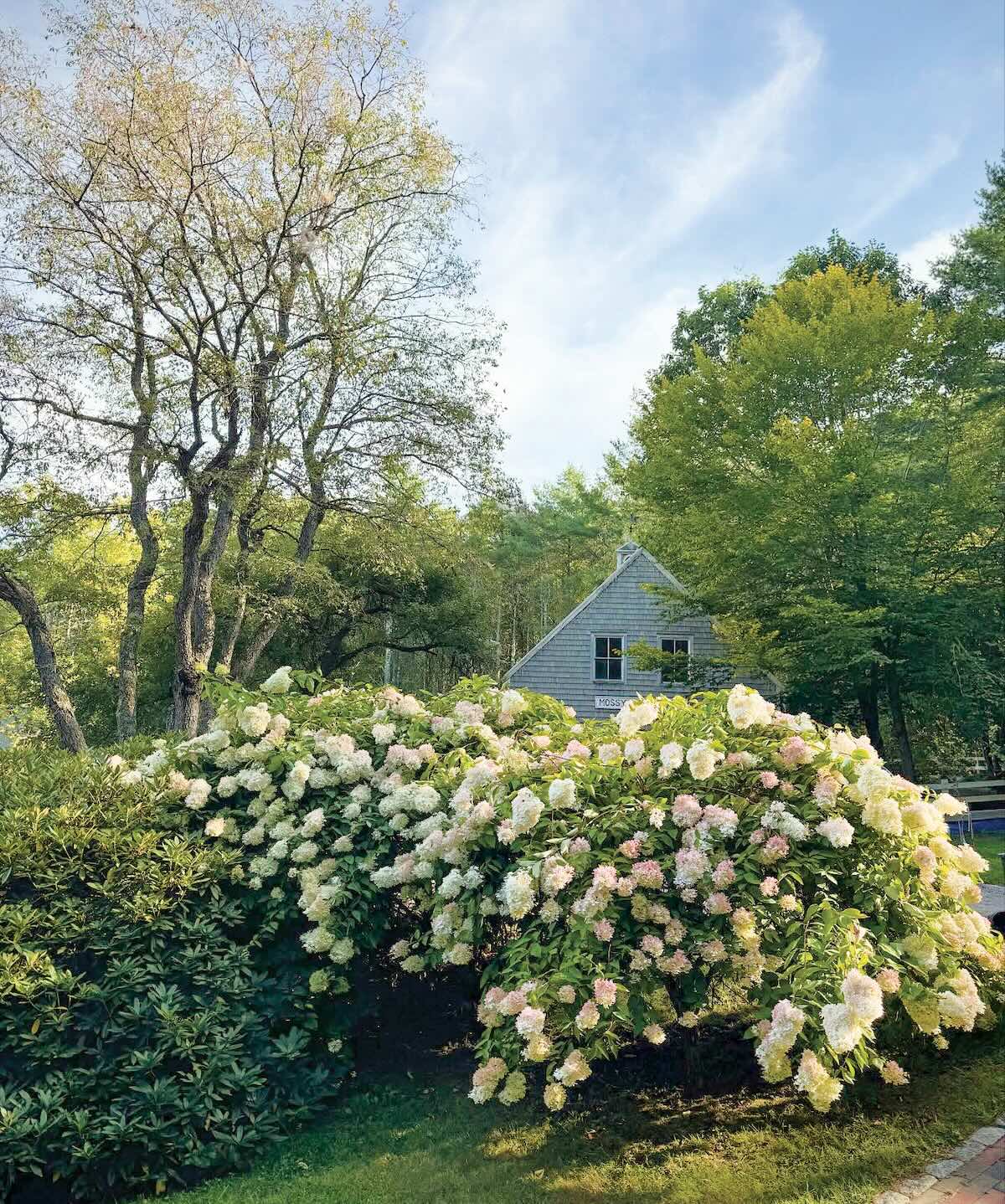
Photo courtesy of The Gentleman Farmer in Maine
PeeGee hydrangeas loaded with near football sized panicles at their peak in late summer. "With September's shorter days and cooler nighttime temperatures the paniculatas are turning from cream to blush/rose."—@thegentlemanfarmerinmaine
THE EVOLUTION OF PANICLE HYDRANGEAS
Actually, there’s nothing about Hydrangea paniculata that should be in the past tense. This shrub has legs. Although PeeGee hydrangeas have been eclipsed by snazzier versions, they all stem from the panicle hydrangea. Not surprisingly, Hydrangea paniculata caught the imagination of the breeding wizards. After all, who could resist perfecting on those buxom wands of bloom? They could make the branches even stronger. They could tweak the blossom heads to make them showier, flashier, and more nuanced. What if they dabbed in a spark of color? What if the hues evolved through the growing season? Imagine if each flower head did a color shift with time. A lot of breakthroughs have happened with hydrangeas over the years.
Particularly impressively, Hydrangea paniculata ‘Fire Light’ brings all those dreams into one thrilling package. Picture big wands of sepals that blush shades of fiery red as summer progresses. Like theatre in your backyard, this ever-changing, color-shifting shrub holds you totally intrigued. Every season is different, every waltz with garden bedfellows holds unique choreography. ‘Fire Light’ might feel like the ultimate showman, but the breeders hint that more sensations are in the wings. To keep your finger on the pulse, here’s the evolution.
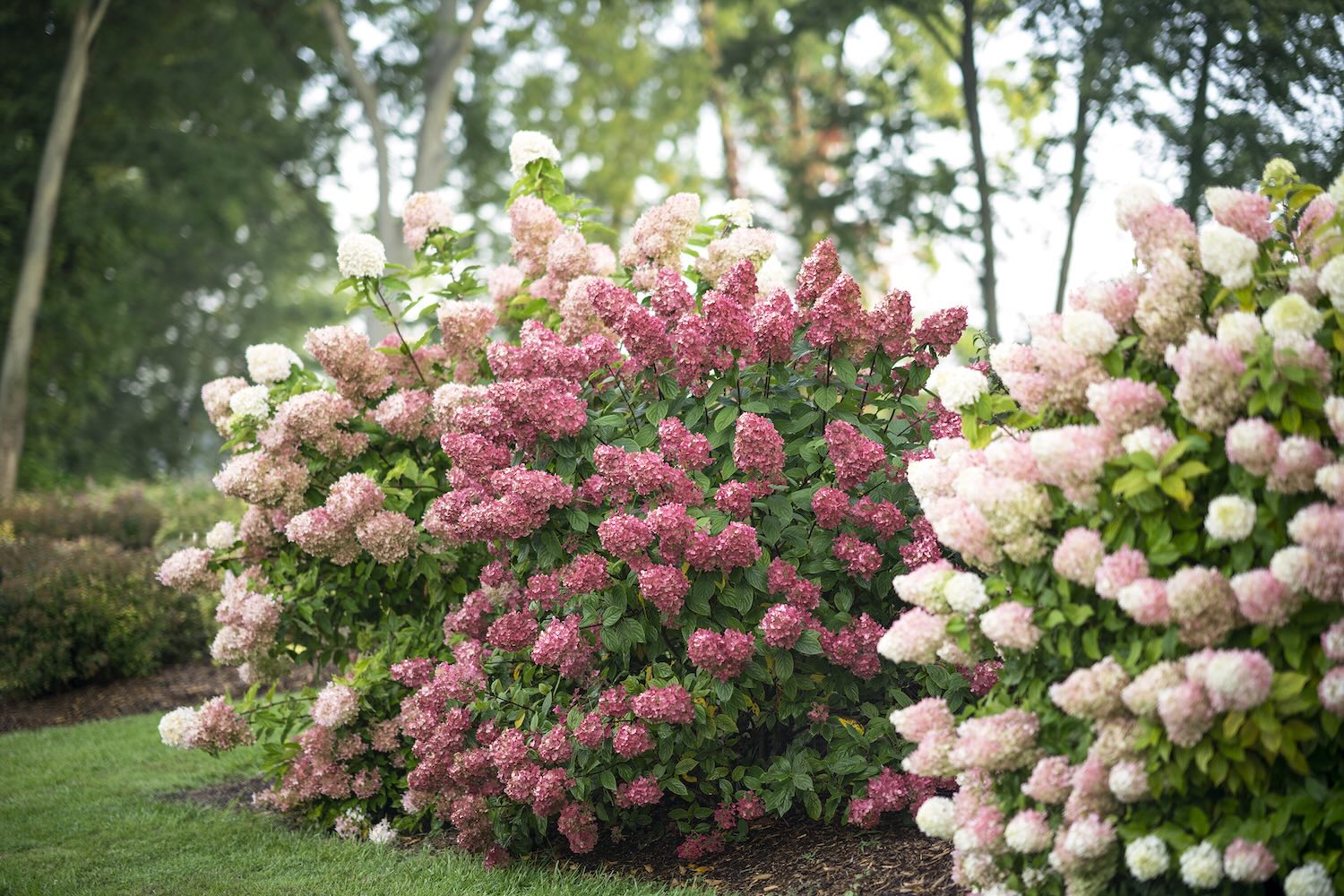
Photo courtesy of Proven Winners® ColorChoice®
This Fire Light hydrangea shows off its deep-red, late summer hues.
As a shrub, visionaries always recognized Hydrangea paniculata as a super-performer with promise. While most shrubs rush into an early blitz of bloom before spending the remainder of the season as a leafy blob, Hydrangea paniculata winds into a long-playing crescendo of papery flower umbels that just keep getting better as the season wears on. They add nuance. The color evolves—even in the species. And they keep you guessing. The hues vary every season—hence the theatrical quality. That progression and that seasonal transformation is why we love to garden.
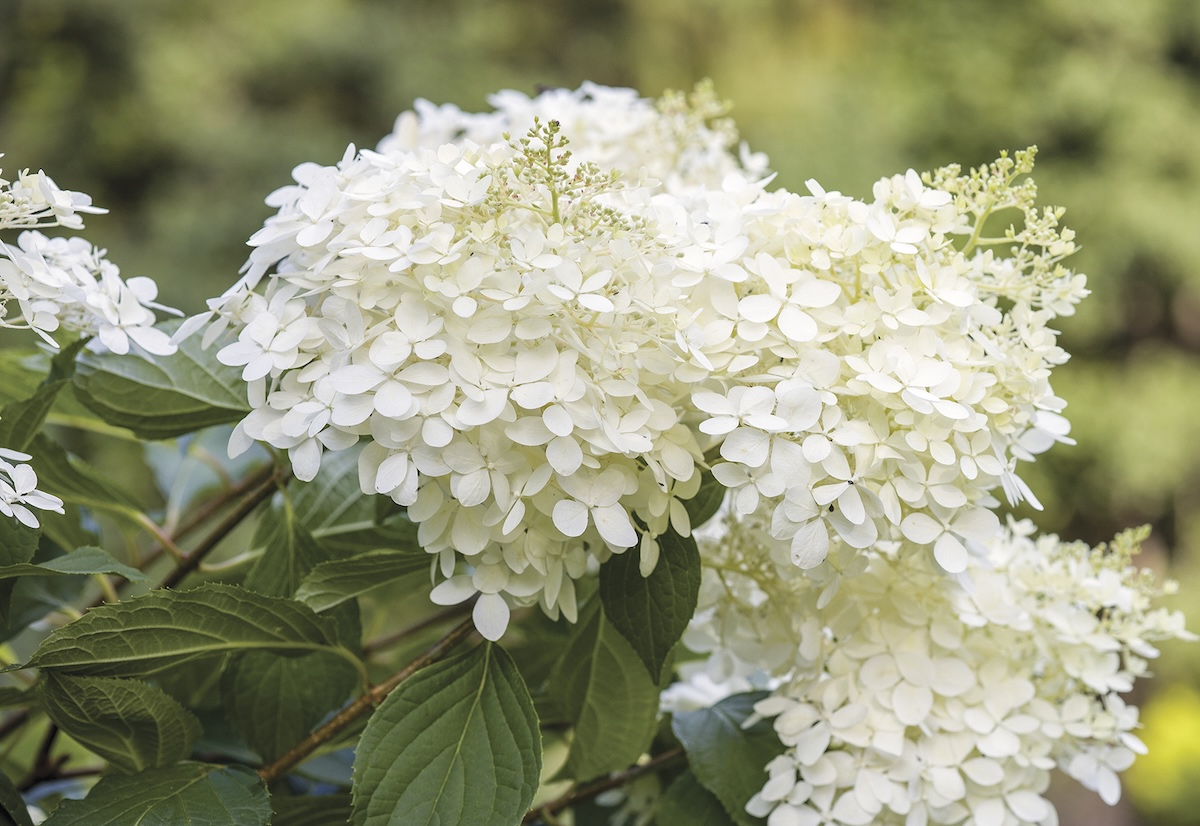
Photo by Juris Kraulis | Shutterstock
The sepals, the papery sterile flower parts of panicle hydrangeas, linger long and catch your eye from a distance.
To define our terms: What we love most about Hydrangea paniculata is its sepals. That’s the papery sterile flower part that lingers long and catches your eye from a distance. In its native China and Japan, the plant was first described by German physician Philipp Franz von Siebold in 1829. An eye surgeon working near Nagasaki, he was beloved by the local population who brought him gifts in admiration—including Hydrangea paniculata. Actually, by the time Siebold met the plant, Hydrangea paniculata ‘Grandiflora’—a version with increased sterile sepals—was already available. Siebold shared what became known as PeeGee hydrangea with Europe via the Dutch East India Company, and by the 1860s, the shrub won European fame.
THE HARDIEST OF HYDRANGEAS
But that was just the beginning for panicle hydrangeas. Thirty years ago, when renowned shrub breeder Tim Wood first began working with Spring Meadow Nursery based in Grand Haven, Michigan, he saw the potential in panicle hydrangeas. And that love affair never cooled over the years. Get Tim Wood wound up about hydrangeas, and he’s off and running. “They’re remarkable,” he sums up his infatuation. Beyond just a pretty face, panicle hydrangeas boast another trait that endears them to gardeners. Hardy from Zone 3 through Zone 8 (while Zone 9 is not out of the question), the beauty of panicle hydrangeas is their reliability. Flower buds appear on new growth and are not thwarted by winter chill, unlike the big leaf hydrangeas. Winter can do its worst, and a panicle hydrangea blossoms unfazed the following summer. That trait alone must have tantalized the Michigan nurseryman, but the shrub had even more cards up its sleeve.

Photo courtesy of Spring Meadow Nursery
Nurseryman Tim Wood
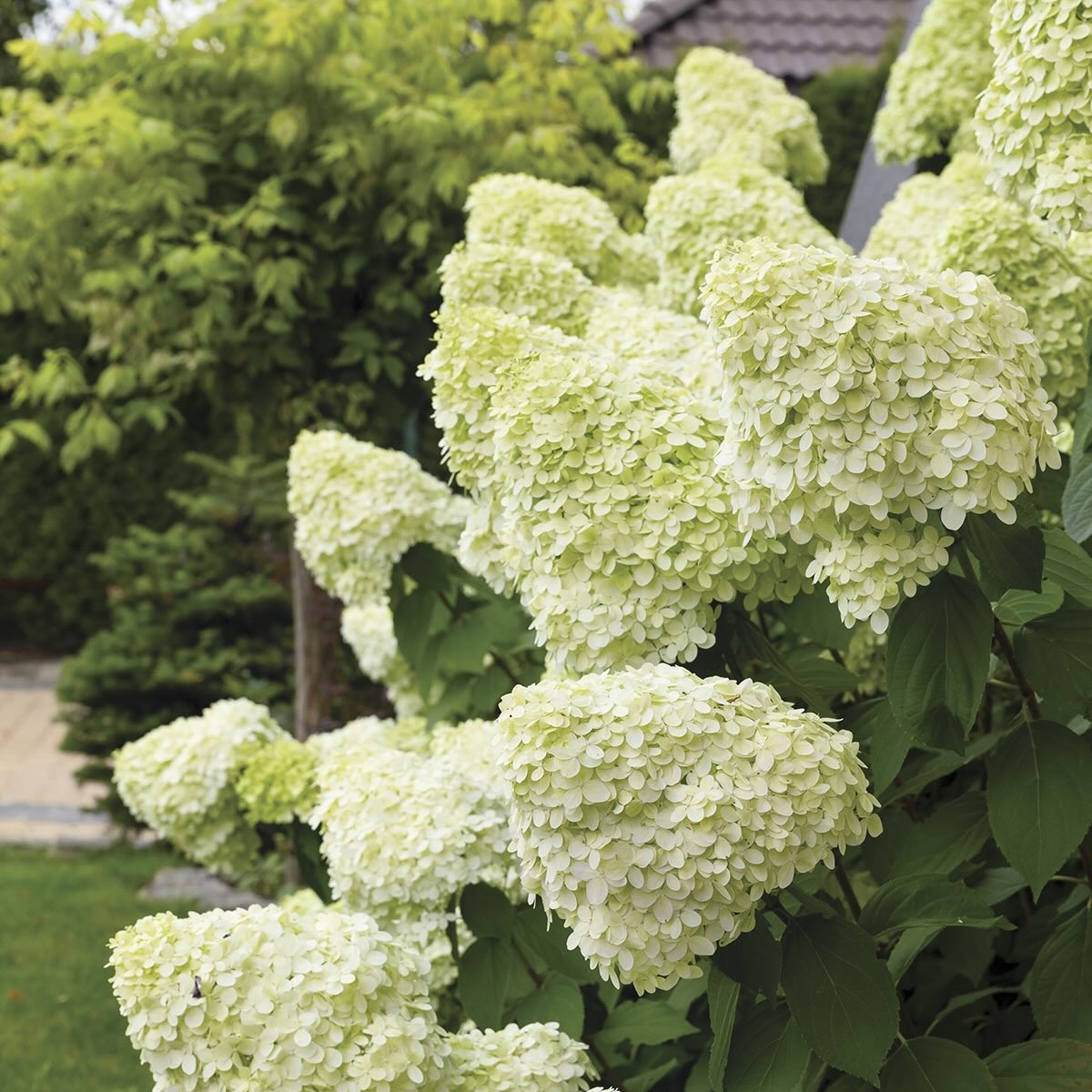
Photo by Anetta Starowicz | Shutterstock
Beloved 'Limelight' hydrangeas hold their flower heads upright on long stems.
THE ARRIVAL OF LIMELIGHT HYDRANGEAS
When his interest was initially sparked, only a few panicle hydrangeas were available in the US. Tim aimed to correct that lack by making a visit to the home of Jelena and Robert de Belder in Belgium. Europe was bristling with new spins on Hydrangea paniculata, and the de Belders were keen collectors. One look at Hydrangea paniculata ‘Limelight’, and Tim knew that his hunch for potential hydrangea superstars was absolutely on target. Developed by Pieter Zwijnenburg, Jr., of the Netherlands in 1986, ‘Limelight’ is a particularly profuse hydrangea with florets that begin white before deepening to green. But not everyone saw the merit of a chartreuse bloomer when Spring Meadow introduced ‘Limelight’ to the US. “I was pretty excited about it,” Tim recalls of an early setback, “but when I entered ‘Limelight’ into competition for a gold medal, the Ohio plant selection committee passed by the shrub in favor of an itea.” Undaunted, Spring Meadow brought ‘Limelight’ to the trade…and growers loved it. “Rather than flopping, it held its blossoms upright on strong stems,” Tim remembers of its initial appeal when introduced into the US in 2002. But ultimately, its adaptability to play multiple roles proved its selling point as a supernova. The fact that ‘Limelight’ can become a flowering hedge over an extended season as well as a stunning stand-alone specimen won over landscape designers. Add into that equation ‘Limelight’s trustworthiness. Landscape designers refer to ‘Limelight’ as “the Golden Retriever of shrubs”—it just wants to please. Tim Wood knew that the breeding line had legs into the future.
EVEN MORE PANICLE HYDRANGEA VARIETIES
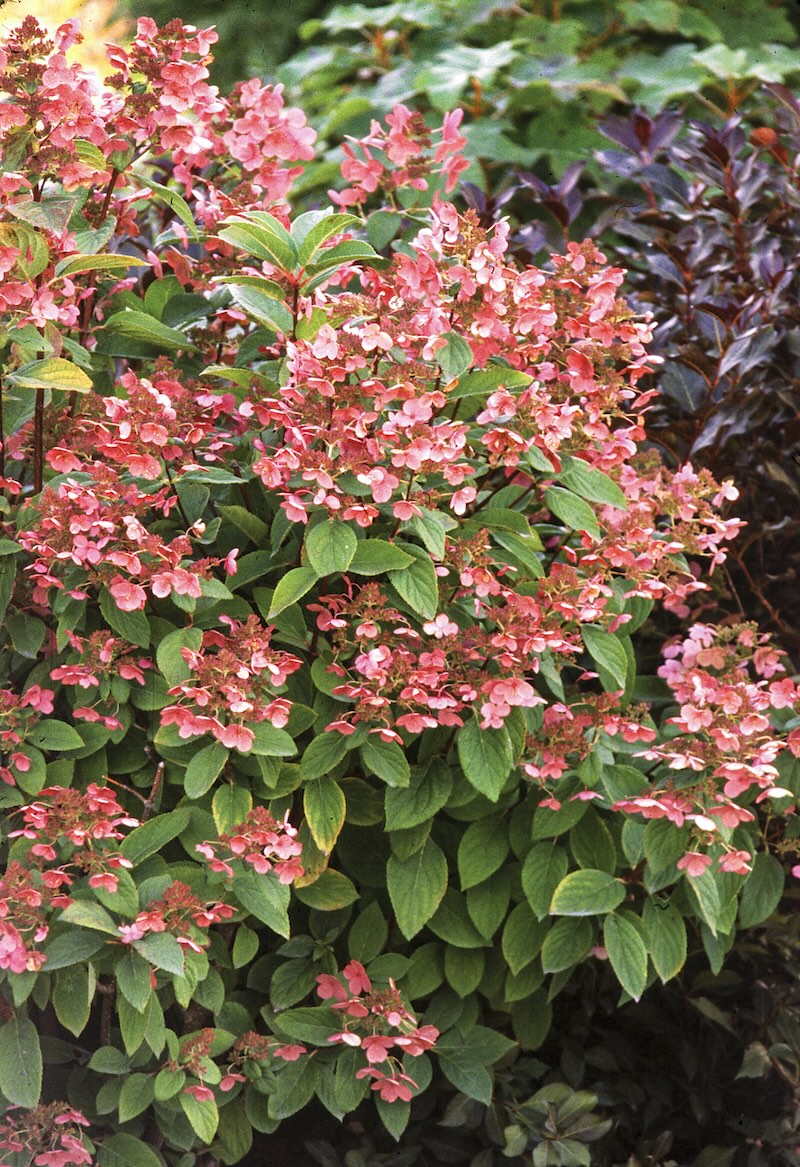
Photo courtesy of Proven Winners® ColorChoice®
'Quick Fire' is the earliest blooming panicle hydrangea. Lace-cap like flowers start out white and turn red.
Meanwhile, Tim brought back another winner from Europe: Hydrangea paniculata ‘Quick Fire’ came from breeders in the Netherlands and features conical flower trusses as well as the lace-cap type combo of sterile and fertile florets. But a major breakthrough was its extended bloom cycle—it’s the earliest Hydrangea paniculata to form blossoms. Although the exact bloom time is always impossible to predict, mid-June is a definite possibility with ‘Quick Fire,’ hence its name. Over the years, breeders have played long and hard with the panicle hydrangea, resulting in 120 varieties. However, there were some failures. ‘The Swan’ had the biggest flowers of any panicle hydrangea. “But it didn’t look good in containers for nursery sales,” Tim says. It ultimately faded away as other innovations proved more popular. Tim was prominent among those using the gene pool ingredients to brew up a series of introductions each with its own attributes. Standouts include ‘Pinkie Winkie’ (2008), ‘Bobo’ (a dwarf version introduced in 2013, Tim describes the blossoms as “little snowballs”), and ‘Fire Light’ in 2014.

Photo courtesy of Proven Winners® ColorChoice®
'Pinky Winky Prime' features huge flowers that age to a hot pink even more saturated than the original 'Pinky Winky.'
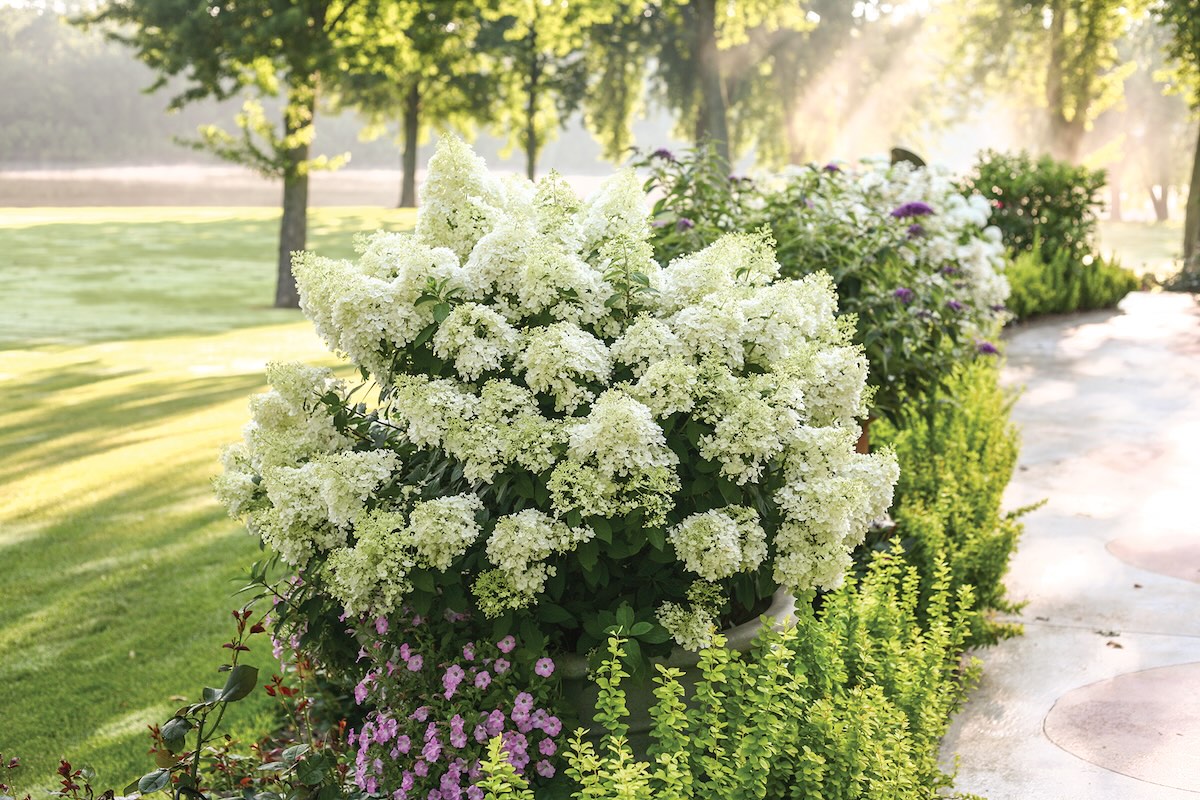
Photo courtesy of Proven Winners® ColorChoice®
The dwarf variety 'Bobo' only grows to 3-feet tall and is covered in lacy cream-colored flowers that turn pink as they age. They are small enough to perform well in containers as seen here.
‘Fire Light’s claim to fame is a radiant two-tone color shift within the plump flower umbels. Think of an ombre fabric, and you’ve got a close analogy. More importantly, those large trusses are held on strong stems capable of supporting their heft. Even in a container (which is the case for nursery sales), the flower stems remain rigid and capable of supporting their buxom blooms (or as Tim describes them, “football-sized blossoms”), making it immensely popular with the retail trade.

Photo courtesy of Proven Winners® ColorChoice®
Compact 'Little Lime Punch' grows 3 - 5 feet tall. As the flowers age, they change from lime-green to Hawaiian Punch-red. Since the shrub continues to produce new blooms, each plant can show the full-range of its flower colors simultaneously.
‘Fire Light’ wasn’t the end of the road. Far from it. Working further with the ombre color shift that holds such fascination with gardeners (for good reason), Spring Meadow introduced ‘Quick Fire Fab’ in 2021 for super early white and pink cone-shaped flower umbels plus increased sterile florets. Following closely on that introduction’s heels, ‘Little Lime Punch’ was introduced in 2022 with a white/green/red color progression on a 3-5 foot shrub. They are just the beginning—Tim hinted that there will be more frontiers for hydrangeas in the future. “Few shrubs bloom so long,” he says. “Nothing performs like a panicle hydrangea.” Clearly, this is a concept whose time has come.
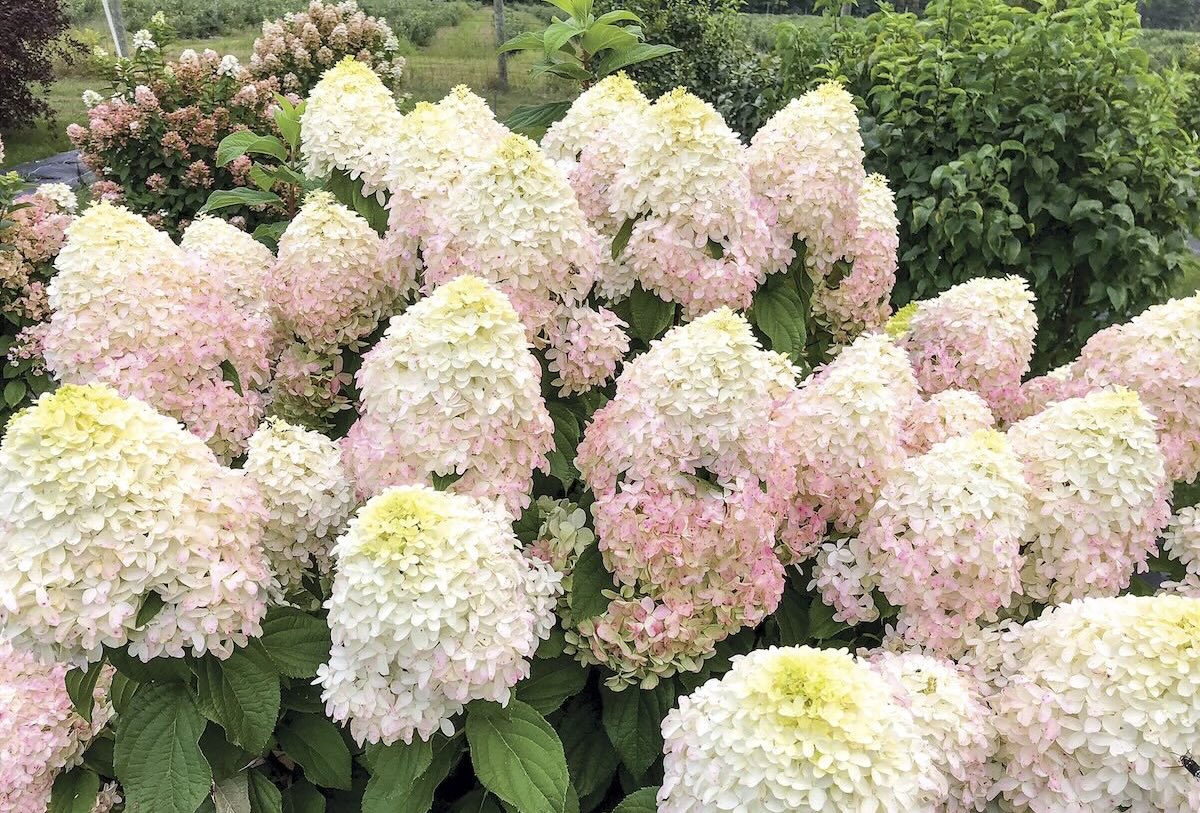
Photo courtesy of Proven Winners® ColorChoice®
Early-blooming 'Quick Fire Fab' sports upright, football-shaped blooms that start out with a coconut lime color.
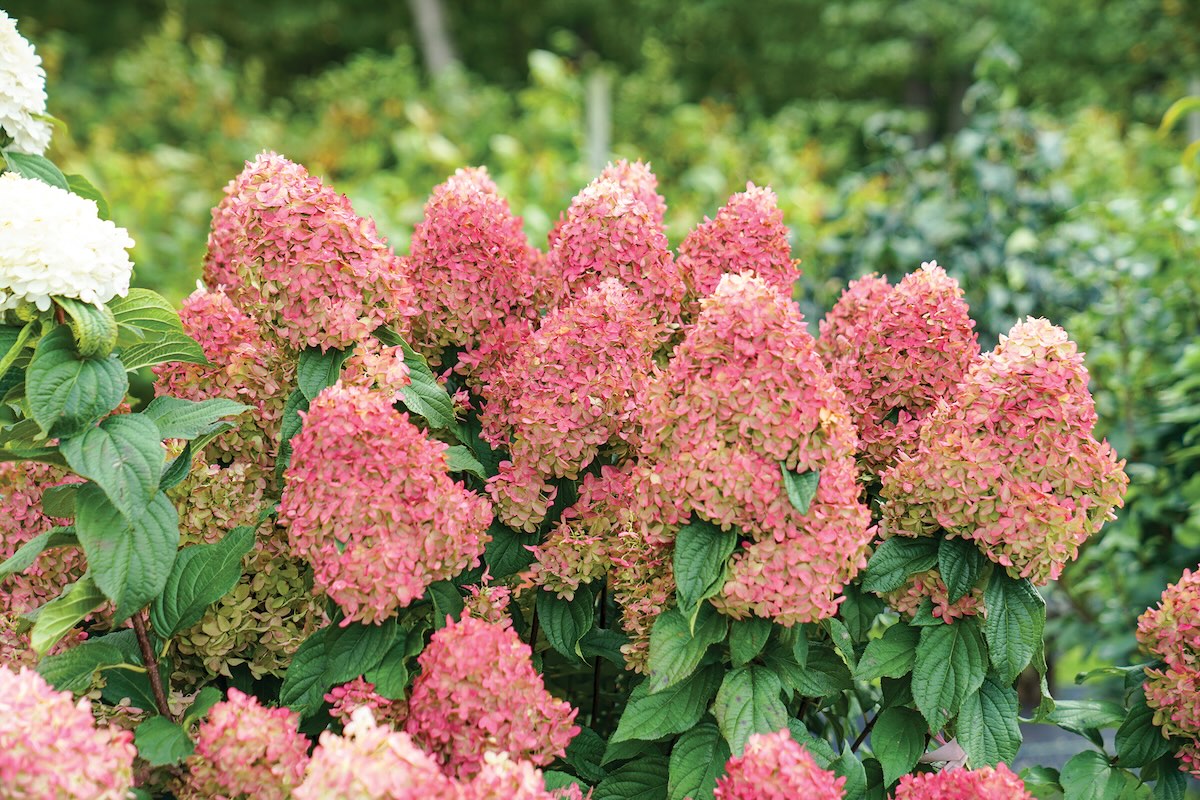
Photo courtesy of Proven Winners® ColorChoice®
'Quick Fire Fab' flowers start to show watermelon tones that spread from base toward green tips.
Growing Panicle Hydrangeas
Tim Wood has grown a lot of panicle hydrangeas through the years, and he can hand out advice on everything from watering to placement. In his experience, panicle hydrangeas often spend a few years settling into their new home, eventually becoming impressively drought tolerant at maturity. “When the root system hasn’t fully developed, this shrub prefers supplemental watering in a dry period,” he advises. “And for the first few years, the flowers might not age as well as they will at maturity. Once the plant is established, that will change.” His advice: Water during the hottest months of the year in July-August to improve flower production and color, especially in the South. “Cooler weather will produce the best color.”
As for pruning, it’s critical for shaping your shrub throughout its lifetime. Start early in the shrub’s career for a shapely plant. You want the bush to develop thick, strong stems to support the new growth, to be specific, “pencil-thick” is what the RHS (Royal Horticultural Society) recommends. Or, as Tim explains it, “The harder you prune, the bigger the flowers.” Pruning late winter to very early spring (before new growth emerges) is optimal. Cut back to two leaf nodes from the old wood and make a flat cut rather than angling your pruners.
Tim also has advice for flower arrangers, especially anyone who wants to preserve hydrangea flower umbels as dried flowers: Wait until a flower head has fully stopped opening new petals before cutting. “Then just tuck the stem into a vase and let the water naturally evaporate. The flowers will dry and last three years or more.” He adds that if you’ve got a panicle hydrangea on your property, you’ll have ample flowers to refresh those bouquets annually. Or leave the flowers to give your winter landscape depth and beauty.
Thanks to the hydrangea “glee club” and its efforts to breed a broad spectrum, you have infinite options.
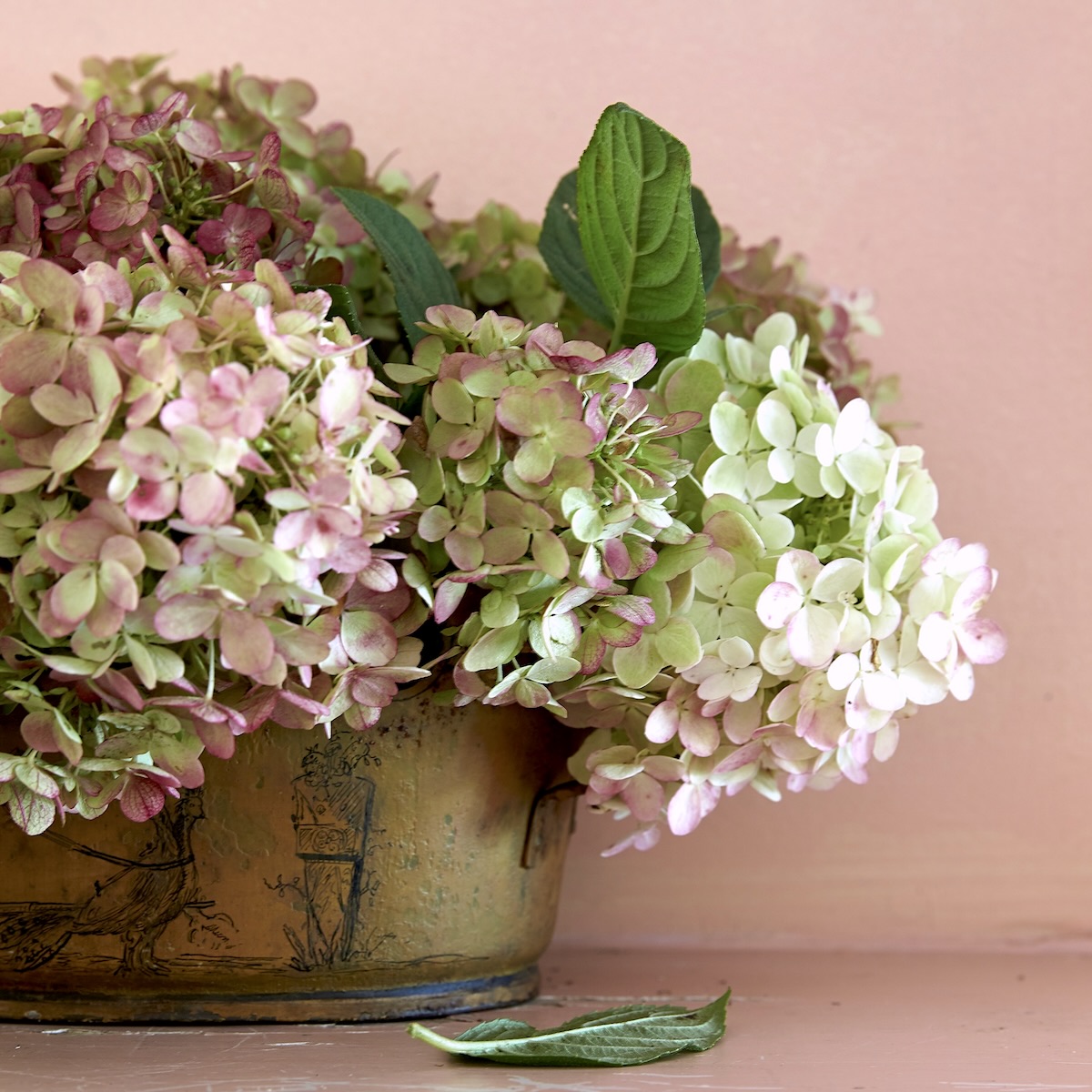
Photo by David Hillegas
For this simple arrangement, Margot Shaw filled an antique cache pot with 'Fire Light' blossoms.
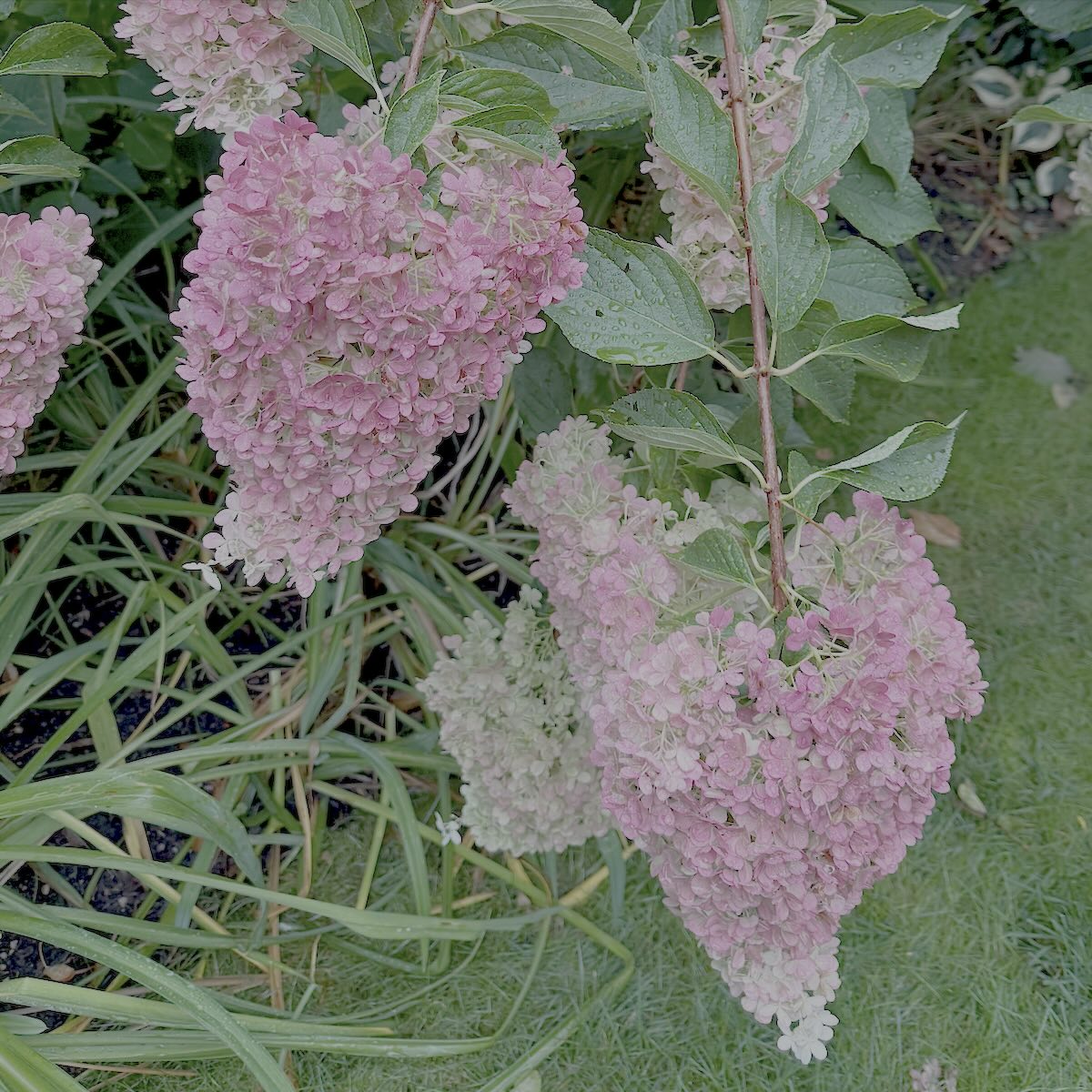
Photo courtesy of Marshall Watson
Marshall Watson's garden has 35 varieties of hydrangeas including this Hydrangea paniculata 'Strawberry Sundae.'
By Tovah Martin
MORE HYDRANGEAS
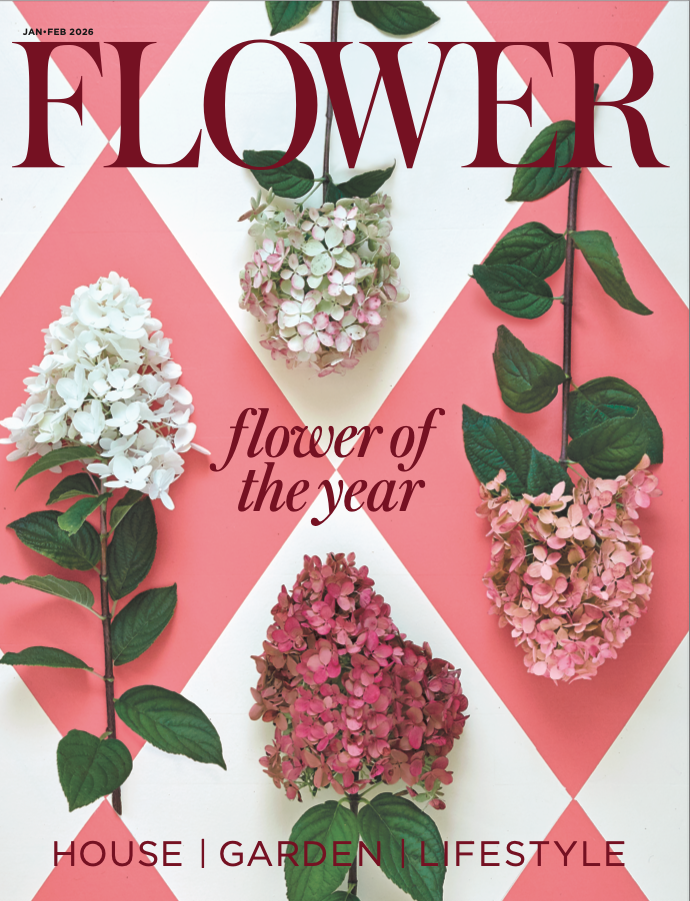
Our Flower of the Year is featured in the January/February 2026 issue of FLOWER magazine.
Look for copies on your local newsstand beginning December 22, 2025 or pre-order a copy for home delivery.